Build a portfolio case study around the problem, your responsibility, key tradeoffs and evidence of results. Retrieve task, review and decision records first, then select the process that explains the work. Do not add steps that never happened or metrics that were never measured.
Polished screens show the visual output. A hiring manager or prospective client also needs to understand constraints, your contribution, why you chose the approach and how the result was checked.
Start with evidence rather than a page layout
NN/g’s case study guidance connects design, process and impact. Select evidence that helps explain a choice.
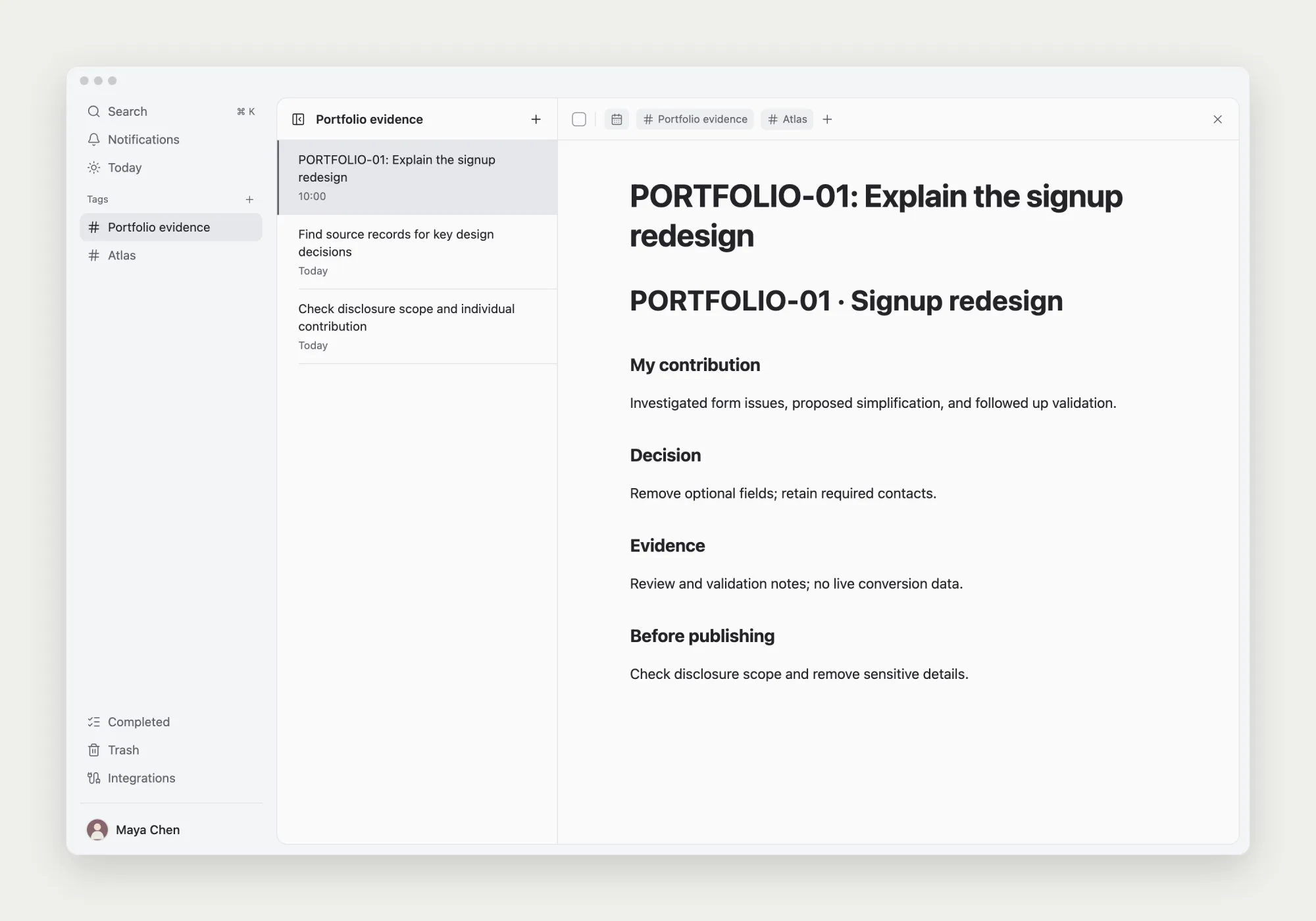
PORTFOLIO-01 covers a signup redesign. The designer investigated form issues, proposed simplification and followed up validation; development and release were team efforts. Describe responsibilities as actions so individual contribution is visible.
| Case section | Source record | Explain |
|---|---|---|
| Problem and constraints | Request and scope notes | The problem and what this project could change |
| Key tradeoff | Reviews and decision notes | Alternatives and reasons |
| Your contribution | Owned tasks and deliverables | Personal responsibility and team boundaries |
| Results and limits | Validation and actual measurement | What was observed and what remains unknown |
Tell the process through one important decision
The team removed optional fields while retaining required contact information. Rather than showing every draft, explain which fields could go, who confirmed that judgment and how the revised flow was checked.
In TodoNote, retrieve project tasks and gather useful reviews and validation records under a Portfolio evidence tag. Build a connected explanation from those sources instead of publishing every daily log entry.
Match the outcome claim to the evidence
With validation notes but no live conversion measurement, report the observed behavior and its conditions. “Participants completed the flow” cannot become “conversion increased 30%” without supporting measurement.
Qualitative results can still matter, such as identifying and removing a blocker. Explain the context rather than making a single observation sound universal.
Check readability and publication scope
Project and period:
Problem:
Constraints:
My responsibility:
Key decision:
Evidence at the time:
Validation method:
Observed result:
Unconfirmed outcome:
Team contribution:
Material cleared for publication:
What I would change next time:Before publishing, check what your organization and client allow you to disclose and remove restricted identities, details and source material. Ask someone unfamiliar with the project to explain the problem, contribution and result after reading; their gaps show where the written case needs work.
Continue with: Year-End Self-Review: Build a Work Achievements List with Evidence