Prepare for a one-on-one with your manager by reviewing previous commitments and choosing the blockers, feedback, or growth questions that need a conversation. Bring facts, explain the effect on your work, and name the support you need. Afterward, record agreements and schedule your own actions so the next 1:1 starts with what changed.
You have thought about a problem all week. Then your manager asks how things are going, and the meeting becomes a spoken status report. A little preparation helps you reach the question that would actually make next week easier.
Bring a question worth discussing
The Asana 1:1 template guide recommends collecting topics between meetings and making room for feedback and growth. From the employee’s side, this means sharing routine updates in advance where possible and using the conversation for judgment, support, and questions.
Alex has a November 6 meeting with Morgan, their manager. An onboarding launch and a last-minute campaign both need the same designer. Instead of writing “too busy,” Alex brings the resource conflict, its effect on delivery, and a proposal for which work should come first.
| Starting point | Specific situation | Support to request |
|---|---|---|
| I have too much work | Two launches need the same designer | Agree what comes first and what moves |
| I would like feedback | My last review did not explain trade-offs | Identify what the risk explanation lacks |
| I want to grow | I want to lead a small review | Agree the scope of a trial and a check-in |
Use a flexible 30-minute agenda
A starting point is five minutes for previous commitments and a check-in, ten for a current blocker, ten for feedback or development, and five to confirm next steps. If one important topic needs more space, use the time there. The agenda helps the conversation; it should not become a quota of questions.
Alex brings two launch approaches and asks which outcome takes priority. For feedback, they ask what is missing from their explanation of risk and trade-offs. That gives Morgan something concrete to respond to and Alex something to try in the next proposal.
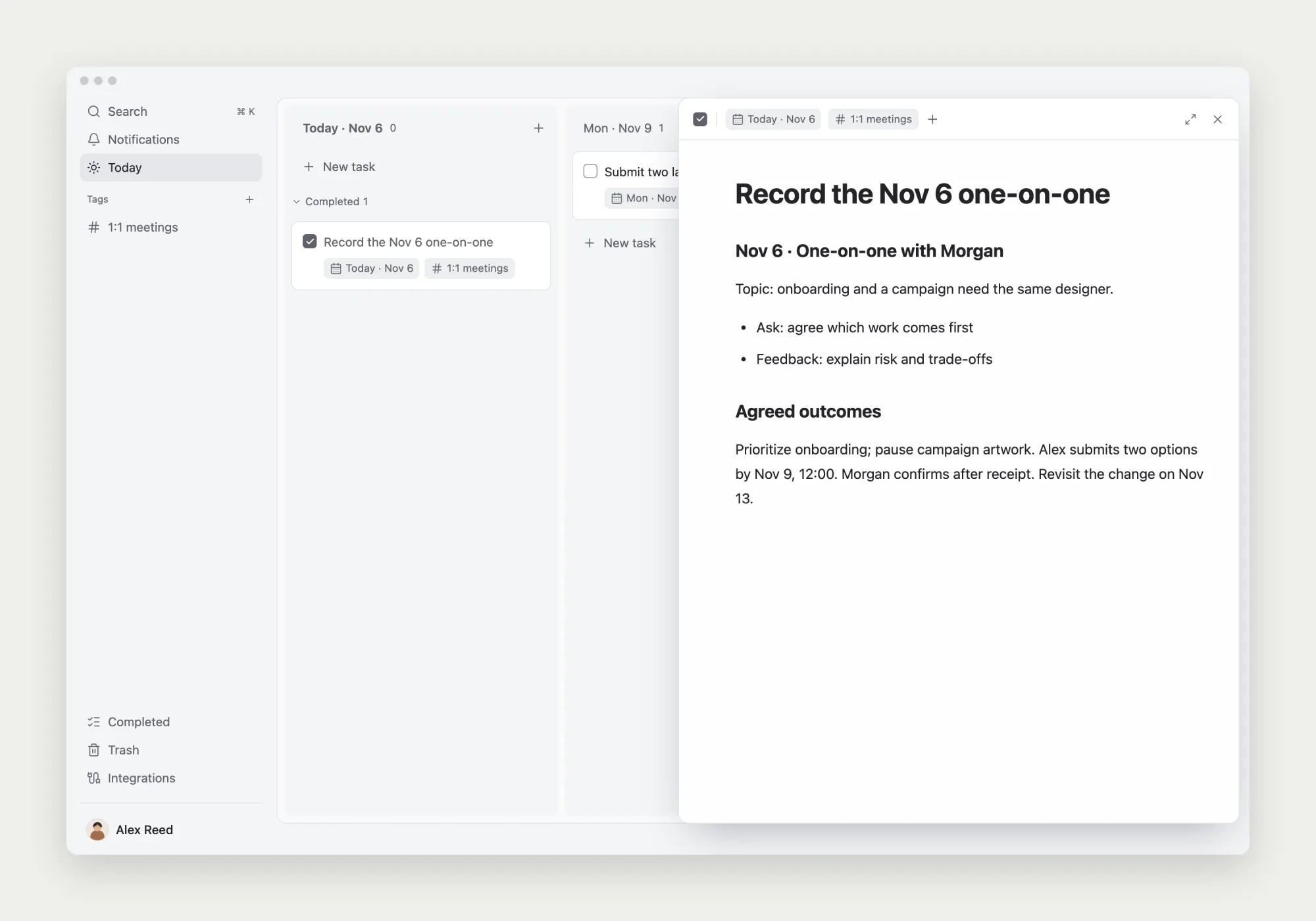
Copy this one-on-one meeting notes template
Keep preparation separate from the meeting outcome. A proposal in your agenda is still a proposal until it is agreed. Leave unresolved questions open and record when you will revisit them rather than turning them into decisions afterward.
Date / participants / next meeting:

Previous commitments / current progress:
Top 1–3 topics for this conversation:
Facts / effect on the work:
My proposal / support I need:

Specific feedback I would like:
Growth direction / small experiment:

Agreed outcomes / unresolved questions:
My actions / completion criteria / dates:
Manager’s support / agreed timing:
My next follow-up date:
Results or evidence to revisit next time:Give your commitments a place in the plan
In this meeting, they agree to prioritize onboarding and pause the campaign artwork. Alex will submit two launch options by November 9 at 12:00, and Morgan will confirm after receiving them. At the next 1:1 on November 13, they will check whether the priority change reduced the conflict.
In TodoNote, keep the discussion and agreement in the original task note. Create a separate task to submit the options, choose a start date, and record the delivery requirement. Completing the meeting leaves the proposal and feedback checks open. Write the manager’s commitment in the note and schedule your own check if you need one.
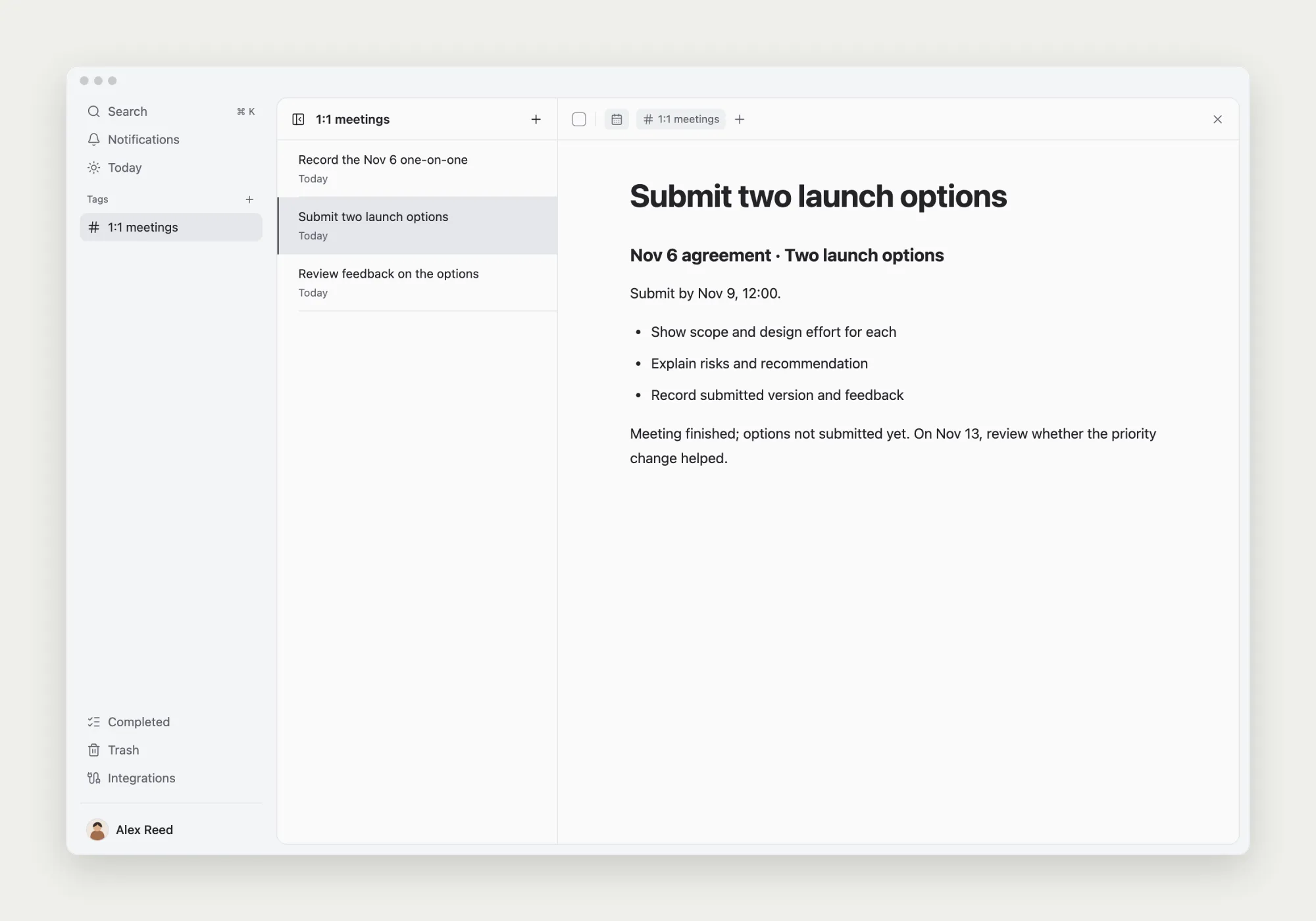
Start the next meeting with what changed
On November 13, check whether the options were submitted, whether priorities changed in practice, and which feedback Alex tried. When a commitment slips, record the reason and a revised agreement. For growth, choose a small experiment, such as presenting the next decision as a one-page comparison.
Retrieve related notes using the one-on-one tag and bring the two or three topics that now need discussion. The guide to meeting notes and action items helps clarify follow-through. Put replies you need from someone else into a Waiting For list.