Build a travel plan around daily activities, with bookings, transport, and checks in the task for the day that uses them. One trip tag gathers the plan. Add actual routes and experiences as you go, and the same notes become a useful record after you return.
A list of attractions can still leave you searching for an entrance, a confirmation, or a rain alternative. The information worth keeping close is the information you will need while making the next move.
Give each day one main thread
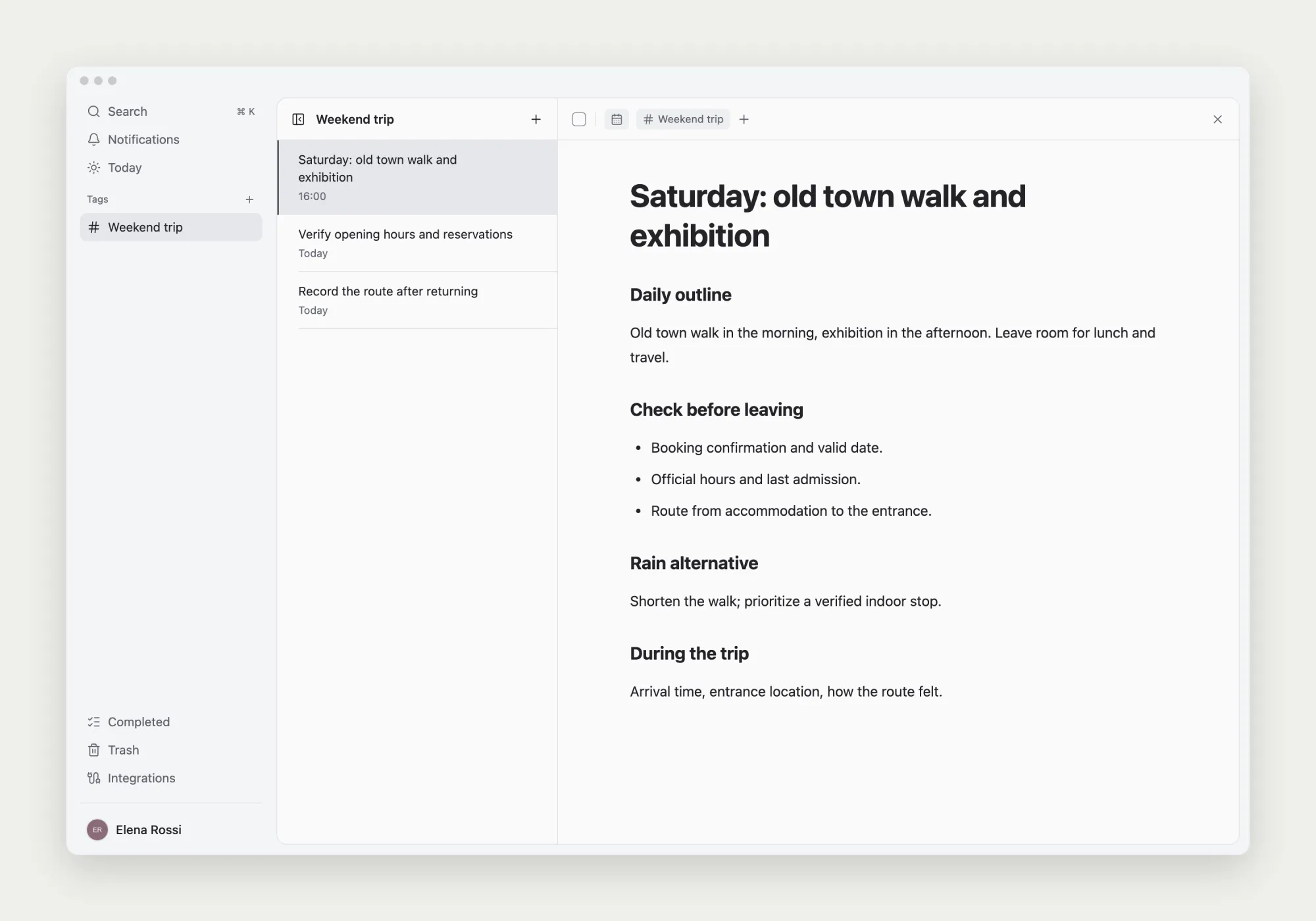
A weekend day might have an old town walk in the morning and an exhibition in the afternoon. Allow time for getting there, eating, and returning before adding another stop. Fixed bookings anchor the day; flexible activities can fit around them.
Name the date and area in the task title. In the note, keep the order, starting point, and checks. Separate pre-trip preparation tasks handle reservations, transport, and packing without turning every daily note into the whole itinerary.
Put the confirmation where you will use it
Keep the exhibition booking with the exhibition day and accommodation information with check-in. Record the source, valid date, and confirmation location. Keep an official link as well as any screenshot, so changes can be checked again.
Hours, transport, and admission conditions can change. Verify them through official channels before departure and record when you checked. Distinguish confirmed details from open questions rather than reusing an old timetable as current evidence.
Prepare for the likeliest change
For a walking-heavy day, a rain alternative can shorten the outdoor route and bring forward an indoor activity whose availability you have checked. State the trigger and what it replaces. You do not need to redesign the entire trip in advance.
For companions with different interests, record meeting points and activities everyone needs to attend together. These anchors leave room for individual choices without losing track of the shared plan.
Keep the experience while it is fresh
At the end of the day, add actual travel time, entrance details, unexpected waits, and how the route felt. “35 minutes on foot” and “tiring for me” are different kinds of information, and both can be useful when labeled clearly.
Completing a daily task in TodoNote keeps its note. Before a similar trip, open the travel tag to see the earlier route and the facts that need checking again. Your experience informs preparation without replacing current confirmation.
A daily travel note
Date / area:
The main thing I want to do:
Order and rough timing:
Transport / rest allowance:

Booking source / confirmation location:
Details to verify before departure:
Last checked:
Weather / delay alternative:

Actual route and time:
Personal experience:
What must be checked again next time:Write enough to support the next decision and leave room for the day itself. For scheduling preparations ahead of fixed commitments, see start dates and due dates.