A time audit compares actual activities across a defined period, then uses that record to choose an adjustment. Log a representative working week, classify the activities and reconcile the hours before interpreting them.
Feeling busy is useful information, but it does not tell you whether delivery, necessary coordination or repeated searching consumed the day. Each calls for a different response.
Record what actually happened
Use a sustainable level of detail: note the start, finish, purpose and result when activities change. Mark forgotten intervals as missing instead of reconstructing a deceptively precise week. Sensitive conversations can stay at category level.
Start with delivery, meetings, communication, maintenance and occupied waiting. Waiting three days for an answer is not three days of labor. Count only occupied work intervals and avoid counting the same interval twice.
Reconcile the total before interpreting it
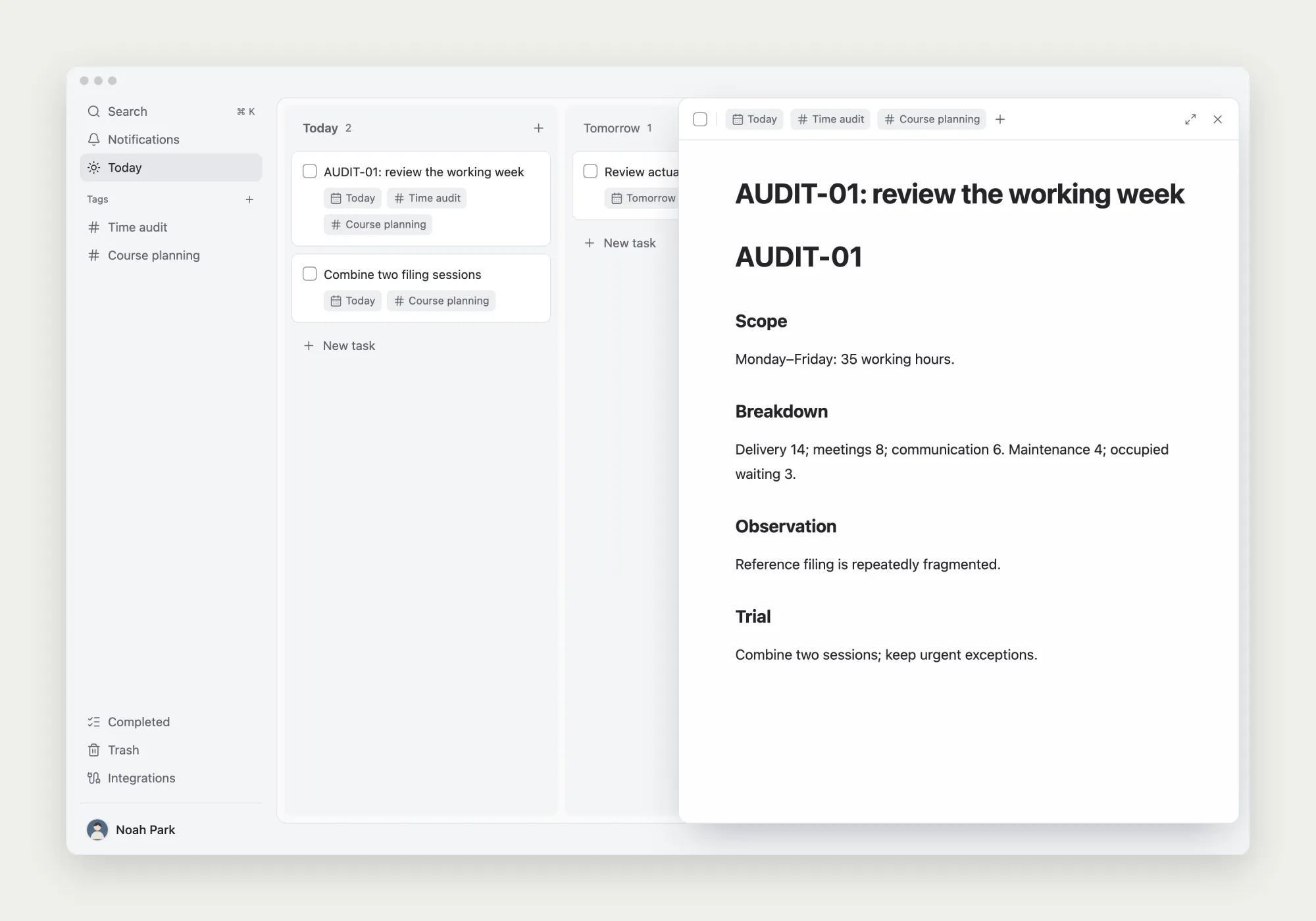
AUDIT-01 records 35 hours: 14 delivery, 8 meetings, 6 communication, 4 maintenance and 3 occupied waiting. The categories add up to the recorded total, making the distribution interpretable.
| Activity | Hours | Question |
|---|---|---|
| Delivery | 14 | Where could work proceed uninterrupted? |
| Meetings | 8 | Which produced necessary decisions? |
| Communication | 6 | Which questions kept returning? |
| Maintenance | 4 | Was the same material filed repeatedly? |
| Occupied waiting | 3 | Was another independent action available? |
A meeting-heavy launch week may be appropriate. Check the stage of work before calling a category wasteful, and sample another week if this one was unusual. Missing intervals also limit what you can conclude.
Test one change
Combine two reference-filing sessions next week while retaining urgent exceptions. Check time, omissions and rework together. An apparent saving that transfers delays to somebody else needs reconsideration.
In TodoNote, keep the audit scope, breakdown and interpretation in one task note. Use subtasks for the trial and review. Calculate totals from your records; planned task dates are not automatic time-tracking data.
Copyable template
Audit period:
Representative or unusual week:
Recording method and granularity:
Activity start and finish:
Category and purpose:
Actual output:
Interruptions and switches:
Missing intervals:
Hours by category:
Reconciled total:
Work stage and constraints:
One proposed adjustment:
Exceptions to preserve:
Review date and measures:Background sources: Monash University
Related reading: Weekly capacity planning: how much work can you actually commit to? · Why Do Your Tasks Keep Taking Longer Than You Expected?