To manage software subscriptions, build an inventory from bills, app stores and service accounts. Check actual use, billing periods, renewal terms and data dependencies before choosing to keep, downgrade, cancel or trial a service. Schedule exports, account changes and confirmation checks separately, then retain the current status and evidence for the next renewal.
Black Friday and Cyber Monday make annual software offers especially visible. Adobe’s 2026 holiday forecast identifies earlier discounts as a driver of Black Friday retail growth. For software, a useful response to the seasonal buying window is to review what you already pay for before adding another commitment.
Reconstruct the inventory from payments and accounts
Noah is reviewing AI writing, design resources and cloud storage. He checks recent statements and receipts, then opens the relevant account or app store to confirm the active plan, purchase channel, currency, billing period, next charge and displayed cancellation conditions. An old promotional email is not the current account record.
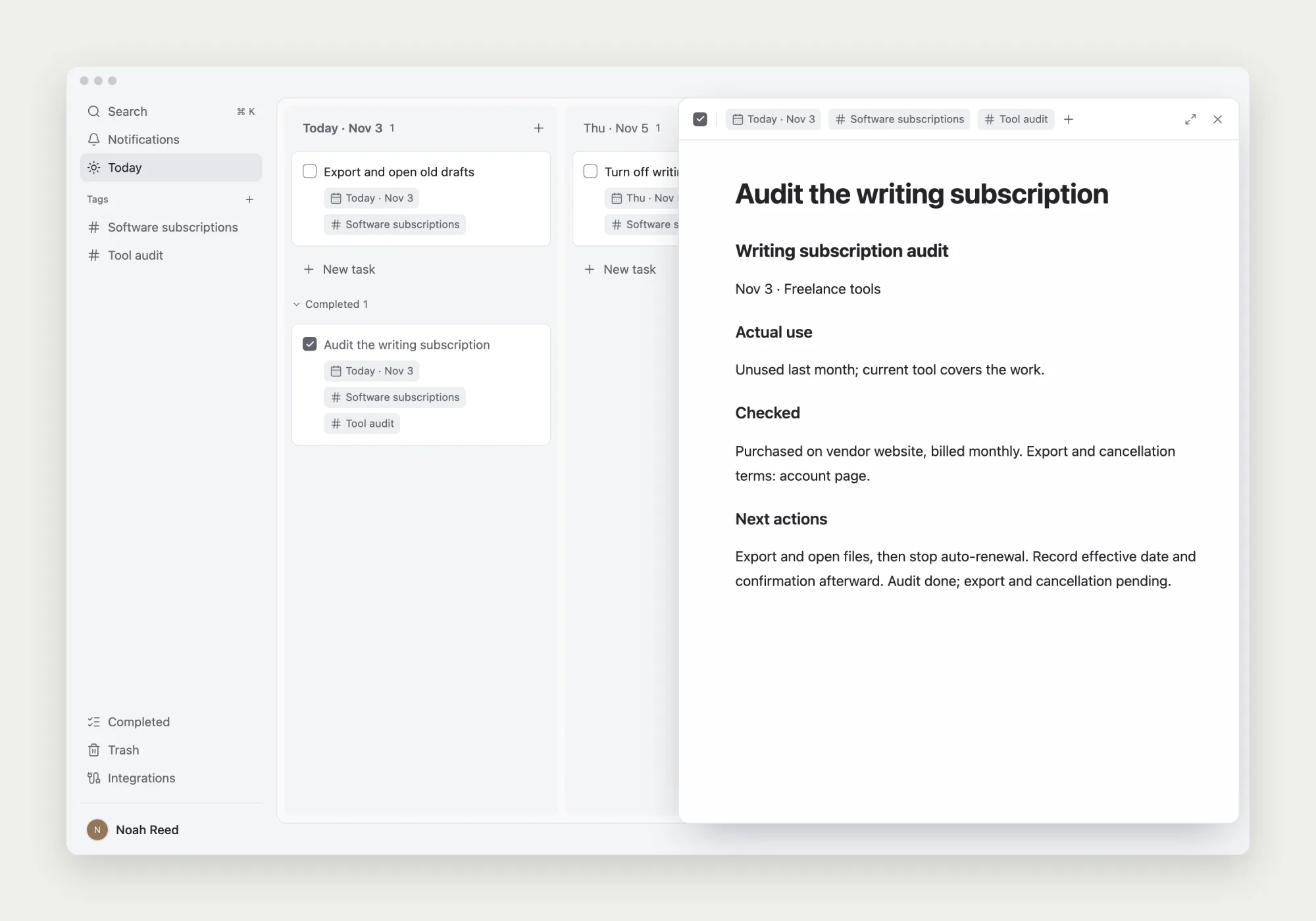
Separate the subscription record from the task of reviewing it. In TodoNote, a task such as “Audit the writing subscription” can hold the findings in its note. Create specific follow-up actions when needed; putting “cancel” in a title does not mean the account has changed.
Write down concrete uses before deciding tools overlap
Replace “used often” with the last actual use, project and requirement it served. Noah’s design-resource library supports an active client delivery, while a second writing tool was unused last month. Similar feature lists do not establish that one tool can perform the same job in practice.
| Subscription | Verified use | Action this round |
|---|---|---|
| AI writing | Unused last month; existing tool meets current needs | Check export and cancellation conditions |
| Design resources | Used in an active client project | Keep; save the license terms location |
| Cloud storage | Holds source files and shared folders | Check capacity and sharing dependencies first |
These choices follow the use records. An unused service may still contain files to retrieve. A service used regularly does not automatically justify annual billing. Record the promotional price, later renewal price and payment period separately before evaluating the commitment against foreseeable work.
Check data, access and licensing dependencies
For the writing service, Noah checks whether he can export old drafts, open the exported files and determine when cancellation takes effect. For cloud storage, he checks usage, shared folders and collaborators before considering a downgrade. Use the terms for the actual service and purchase channel rather than assuming all plans behave alike.
Design assets introduce licensing questions as well. Keep download and license records, and check the provider’s terms for continued use in existing projects. Account access, possession of a file and permission to use an asset are separate questions. Downloading a file does not settle all future licensing conditions.
A copyable software subscription audit template
Keep one current record per service and append important changes with dates. Store a receipt location or order reference rather than full payment-card details.
Service / purpose / account identifier:
Purchase channel / plan / currency:
Amount / billing period / tax treatment:
Current charge / verified next renewal:
Offer conditions / later price / terms location:

Last actual use / project:
Available alternative / essential capability:
Data / sharing / licensing dependencies:
Export location / file-opening check:

Decision / reason / date:
Action channel / effective time:
Confirmation reference / checked status:
Remaining action / planned date:Do the account change, then verify the result
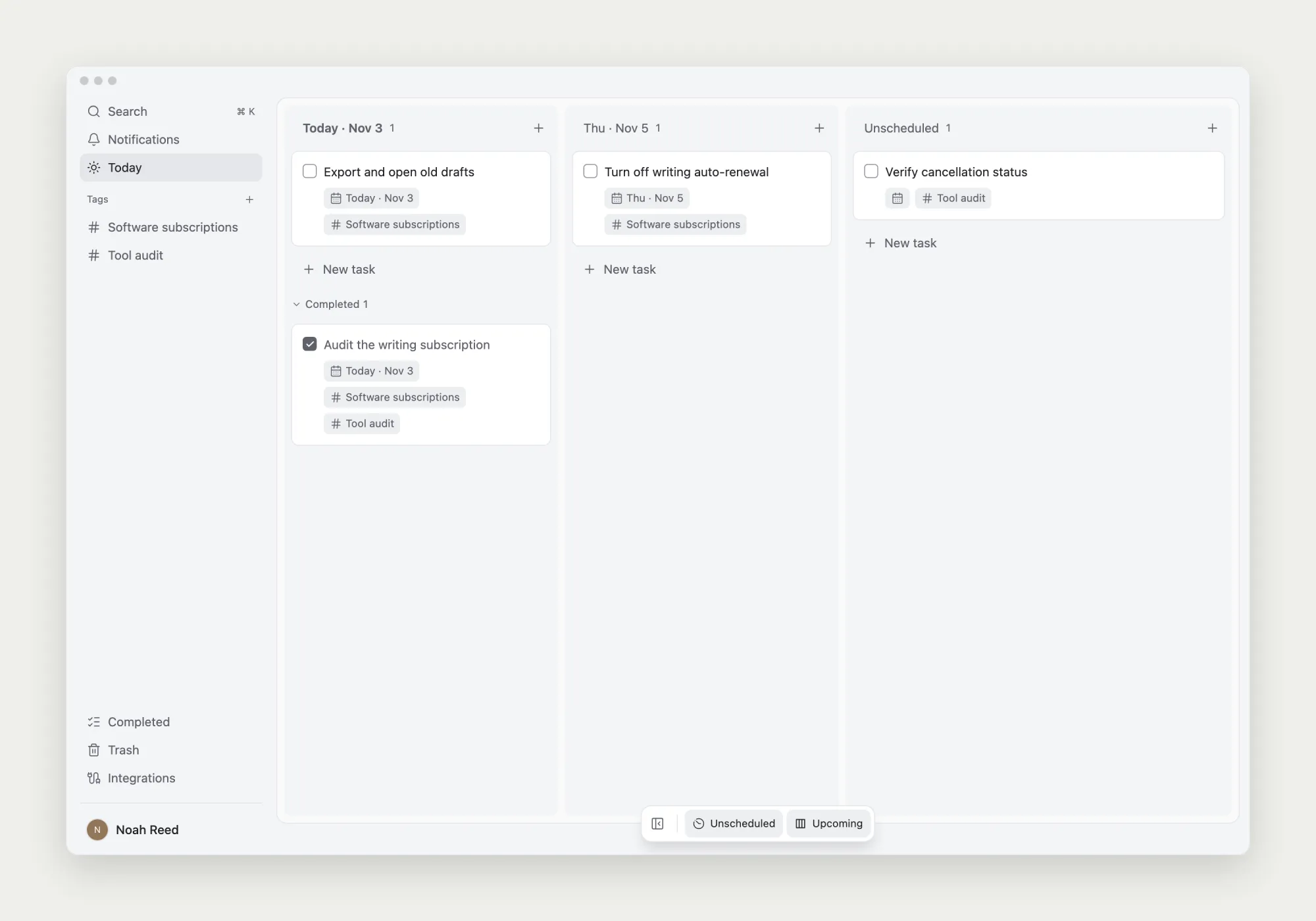
After the audit, Noah schedules exporting drafts, turning off auto-renewal and checking the cancellation result. He opens the exported files before changing the account. After the change, he checks the account status and confirmation message for the actual result and remaining access period.
The audit is complete in the illustration, but export, cancellation and confirmation are still open. Personal work dates belong in the plan; the provider’s verified renewal and effective dates belong in the record. The distinction between start dates and due dates helps keep these separate.
Give a new tool a testable job before buying
Before accepting an annual offer, state the next real job, the capability your existing tools lack and how a trial would demonstrate a useful difference. Record the actual trial expiry and schedule a review beforehand. Count on a refund only when the applicable service terms explicitly provide it.
Update the inventory when you add a service, renew it or change its purpose. For a repeatable audit, save the steps as a recurring-task template and keep each round’s findings. The next offer can then be assessed against an existing record.