Plan a research week around a question you can inspect, connecting reading, experiments and discussion. Keep data, code, environment, configuration and result references for each run. If the expected result does not appear, record what was checked and what is missing. The next week can then begin with a specific question rather than another broad ‘run experiments’ task.
Daniel compares a classification method from a paper with a baseline on a fixed twenty-example validation subset. The week aims to check implementation and identify the next investigation. One small comparison is not a complete replication of the paper.
Bound the question you will inspect this week
Ask how the current method implementation and baseline differ on this fixed subset. The deliverables are the relevant paper settings, two traceable run records and unresolved points for the lab meeting.
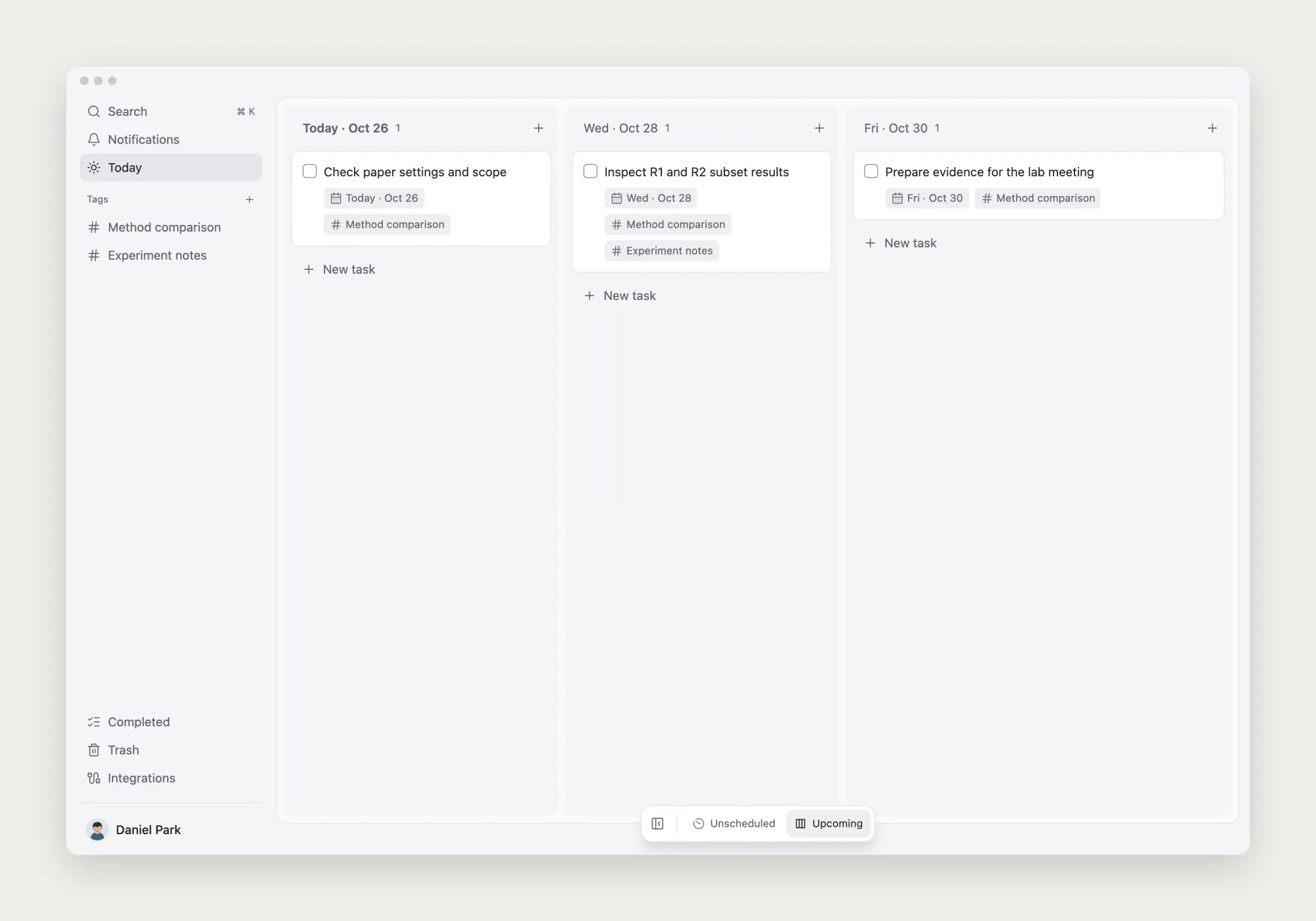
Schedule reading, configuration, execution, checking and discussion. While runs execute, continue checking the method. A task called ‘replicate the paper’ need not squeeze every dataset and experiment into the week.
| When | Work to move forward | Record to keep |
|---|---|---|
| Mon · Oct 26 | Define comparison and locate the method | Paper section and scope |
| Tue · Oct 27 | Check implementation and configuration | Data, code, environment and settings |
| Wed · Oct 28 | Run baseline and paper method | R1, R2 and fixed-subset results |
| Thu · Oct 29 | Inspect differences and uncertainties | Completed checks and missing details |
| Fri · Oct 30 | Discuss and plan the next comparison | What to check before another run |
Read for the settings that change an experiment
Keep the paper version, method section and important settings. Separate what is explicitly stated from a provisional implementation choice. An unclear parameter stays a question rather than becoming a supposedly confirmed value.
Code and results remain in experiment storage; TodoNote links to the records. Preserve data splits, code, environment and configuration so the next comparison can identify what stayed fixed. The Turing Way’s reproducible environments guide explains why capturing the environment matters.
Keep the comparison when the hoped-for gain is absent
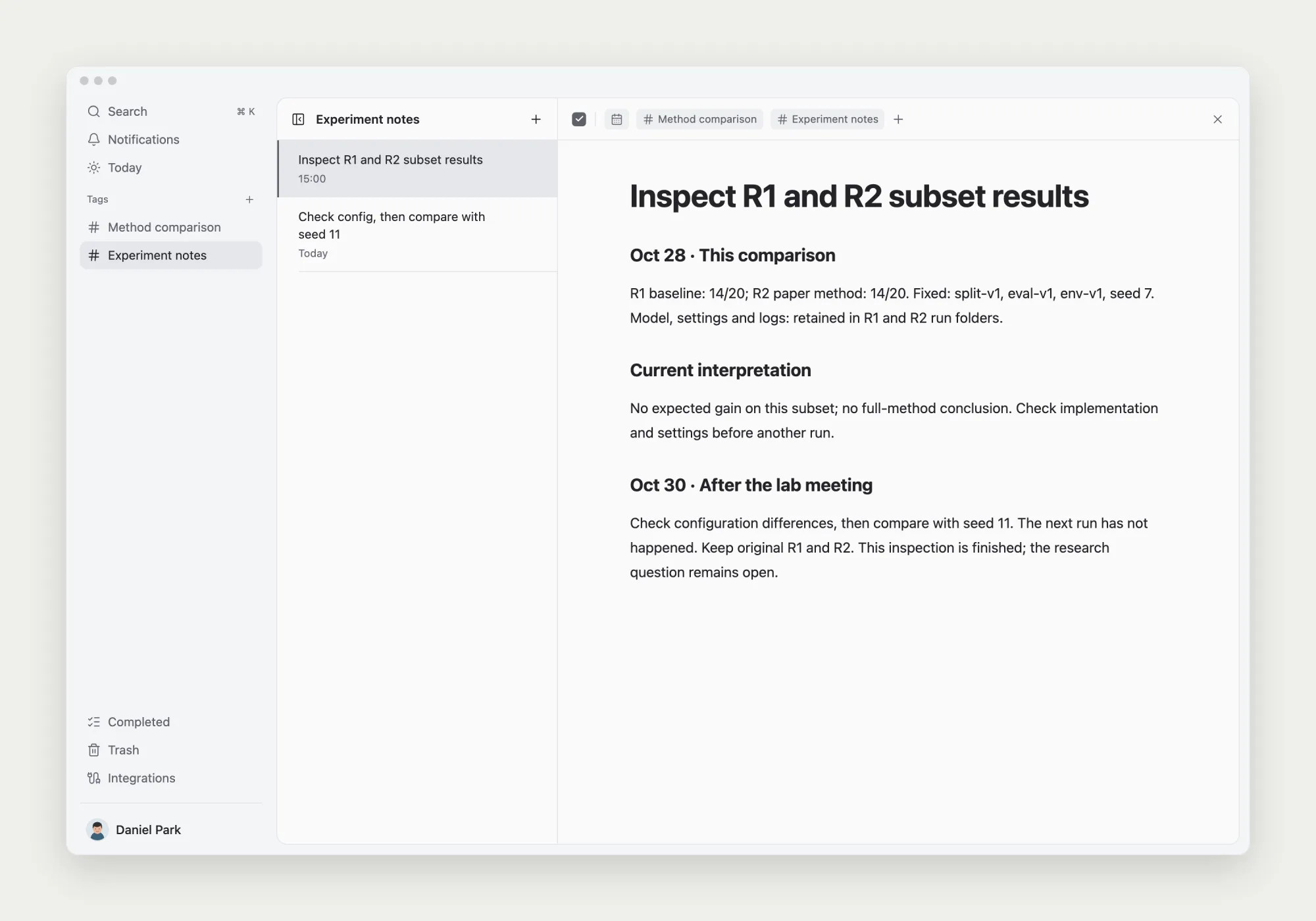
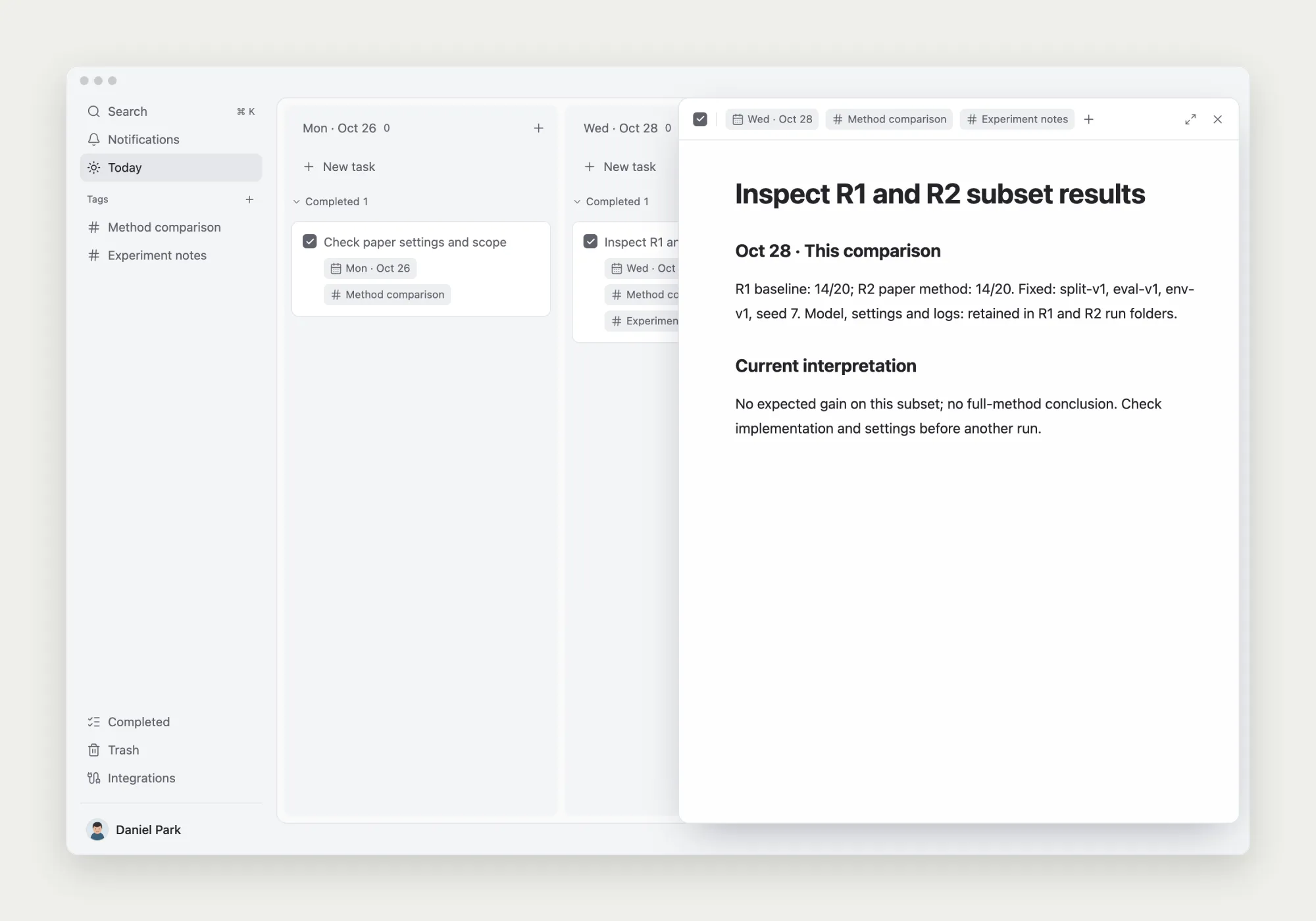
Wednesday’s R1 baseline and R2 paper method both classify fourteen of twenty examples correctly. The note identifies split-v1, eval-v1, env-v1, seed 7, and the model and configuration references for both runs. No expected improvement appears in this comparison.
That does not refute the paper or establish equal performance on the full dataset. Check implementation and configuration before extending the runs. Keep original metrics, logs and failed attempts rather than retaining only a later best result.
Prepare the discussion around checks and open questions
Bring one question, one comparison and two uncertainties: whether implementation matches the method, and whether the result recurs under further runs. Separate completed checks from proposed experiments so others can help choose the next step.
After discussion, turn advice into an action such as ‘Check configuration differences, then compare with seed 11’. State the prerequisite and result to inspect. If implementation details are missing, resolve that input before moving the whole research question to another date.
Continue from the original experimental evidence
Tag the comparison ‘Method comparison’ and ‘Experiment notes’. Append Friday’s discussion: check implementation before another run; the new comparison has not happened. This inspection task can close while the research question stays open.
Create a new task and run identifiers for the next experiment, linking back and preserving changed conditions. For a synthesis, use research notes that support a judgement. Progress can mean eliminating an explanation, finding a configuration gap or formulating a better question.